Keyboard Shortcuts?f

×
  • →Next step
  • ←Previous step
  • ↓Skip this slide
  • ↑Previous slide
  • mShow slide thumbnails
  • tShow transcript (+SHIFT = all transcript)
  • nShow notes (+SHIFT = all notes)

Please be cautious in using the transcripts.

They were created mechanically and have mostly not been checked or revised.

Here is how they were created:

  1. live lecture recorded;
  2. machine transcription of live recording;
  3. ask LLM to clean up transcript, and link to individual slides.

This is an error-prone process.

Click here and press the right key for the next slide.

(This may not work on mobile or ipad. You can try using chrome or firefox, but even that may fail. Sorry.)

also ...

Press the left key to go backwards (or swipe right)

Press n to toggle whether notes are shown (or add '?notes' to the url before the #)

Press m or double tap to slide thumbnails (menu)

Press ? at any time to show the keyboard shortcuts


Norm-Like Patterns

To get from mere background assumptions to standards (=norms), we need to go beyond the colour case.
Let’s start with a case where attributions of agency generally (rather than specific mental states) seems to have a normative aspect.

Bastian, Loughnan, Haslam, & Radke (2012, p. Figure 3)

This is from Study 3.
Rate mental capacities (e.g. choosing, thinking) at T1
Then told they will be eating fruit, or eating meat (the 'sampling')
‘The findings of Study 3 provide direct support to our disso- nance hypothesis. Participants denied mind to food animals when they were asked to think about the origins of meat. However, this denial was only significant for participants who were told they were going to sample the food animal’s meat. Participants who wrote about the origins of meat but were told they would sample an apple did not deny mind to the same degree, indicating they did not experience the same level of dissonance.’ Bastian et al. (2012, p. 252)

- ‘Did I know that?’

- ‘You did.’

- ‘Oh no, what have I done!’

see McGeer (2007)

Attributing merely physical states like mass or velocity rarely has an effect on the target of attribution.
But mental state attributions often do alter the target’s behaviour.
This is McGeer (2007)’s idea, but not her example.
living out a theory; can use revealed vs stated preferences as an example (see handout)

attributions set standards that I am to live up to

Aim here is to show that we need to go beyond the colour model in at least one way: this is what gets us from backgound assumptions to standards.
Thought is that I implicitly take attributions as something that I aim to live out (at least sometimes); so they are normative in at least that basic sense.
Link to mindshaping?
^THINK: do I also want to say something about mental state attributions grounding responsibility, blame etc?
So far I just tried to establish the limit: there is a normative aspect to mindreading attributions.
next step is to try to go beyond Mindreading as Coordination (MAC) to explain how this normative aspect arises.

confident local agreement

+

variation between groups and experts

for

- agency attributions

- mental state attributions

How to explain both agreement and variation?

- need to ask where background assumptions come from

- Mindreading as coordination: local agreement results from coordination; variation from different interaction histories

limits: long-term standards; unknown principles; normativity

background

normative decoupling

This goes back to Hart’s distinction between rules and habits.

‘How does a habit [mere pattern] differ from a rule? ... A social rule has an ‘internal’ aspect ...

there should be a critical reflective attitude to certain patterns of behaviour as a common standard ...

this should display itself in criticism (including self-criticism), demands for conformity, and in acknowledgements ..., all of which find their characteristic expression in the normative terminology of ‘ought’’

(Hart, 1994, pp. 55–7)

This has led to a division in theories of norm psychology.
On your left are those that make normative attitudes constitutive of norms; on the right are those that take behaviours to be the fundamental thing.

What is constitutive of normativity?

normative attitudes

‘norms are characterized by general acceptance of particular normative principles within the group in question.’

(Brennan, Eriksson, Goodin, & Southwood, 2013, p. 94)

behaviour

‘Norms are behaviors that are self-enforcing at the group level [...] Norms are population-level equilibria in interactions that typically have multiple equilibria.’

(Young, 2015, pp. 361, 364)

The full quote is ‘Norms are behaviors that are self-enforcing at the group level: People want to adhere to the norm if they expect others to adhere to it.’ (Young, 2015, p. 361)

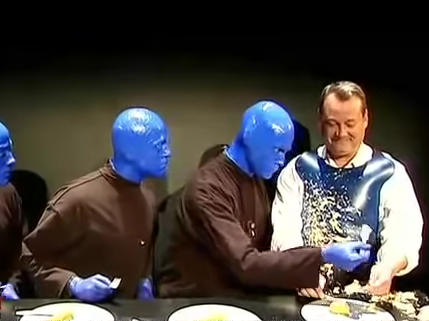
It feels wrong but isn’t.

It feels wrong but isn’t.

->

normative guidance decoupled from normative attitudes?

A clue that something is missing from this view comes from cases where things feel wrong, but they aren't. Here is an example of someone eating vomit from your sleeve. It feels wrong, but most of us would say there is nothing actually wrong with it.
Like Haidt, Bjorklund and Murphy’s idea about dumbfounding but there is no judgement that it is wrong.
This is contrived but there are also everyday examples ...
dog pooh stone
also eating while reading on phone or typing is ok, but not while sitting on the toilet. (Isabel’s example.)
You can find everyday examples too. A few weeks ago, my wife covered a pile of dog poop on the beach with a large, flat stone. Later, forgetting this, I went to sit on the stone. She said, ‘I wouldn't sit on that stone,’ and we both realised that while there was nothing wrong with sitting on it—the stone was a strong cover—it still felt wrong. And sure enough, I stood up. It feels wrong, but it isn't wrong.
(This is a speculation (conjecture?) that goes a tiny bit beyond the data. Existing data shows that there is dumbfounding. But in dumbfounding people maintain that it is wrong. I’m speculating that we can still feel it is wrong while knowing it is not wrong.)
Dumbfounding produces some examples like these. (Strictly in dumbfounding people maintain that it is wrong. Interesting effect: you can feel that something is wrong (eg incest) even while thinking it is not wrong.)
Why do I mention these examples? Because they are hard to accommodate on the Hart-inspired idea that normative guidance invariable involves normative attitudes. (Not impossible, but anomalous.)
(‘habits’ in Hart) patterns ??? ??? rules mere patterns . . . . normative attitudes . . legal code .
The idea that there is something in between rules and ’habits‘ is not entirely alien to Hart. Hart made an analogous point about general acceptance of rules in a modern state. He observed that ordinary citizens may ‘know nothing more about the laws than that they are “the law”’, whereas experts involved in law-making will be guided by knowledge and ‘critical attitudes.’ He stresses that ‘both aspects must be kept in view if we are to see this complex social phenomenon for what it actually is’ (Hart, 1994, p. 61).
In terms of normative decoupling, the analogous point is that normative attitudes gain significance through shaping behavioral patterns which, through normatively catalytic actions, acquire a life of their own. It is because of this tendency of behavioral patterns to take on a life of their own that understanding the dynamics of norm change requires a framework which focuses not only on normative attitudes but also on factors which underpin the persistence of patterns independently of those attitudes.
I want to pause to strengthen the case for putting something in-between habits and rules.
The Continuity–Change Dilemma
The three-stage cases create a dilemma. Assumption: the three stage case is a genuine case of norm-change. (Perhaps involving multiple norms; that doesn't matter.)
Horn 1: if your account of norms demands attitudes, you miss the continuity that makes this a case of norm-change.
Horn 2: if you focus just on the patterns (Hart’s ‘habits’), you miss the difference that makes this a case of norm change.
We have attitude-based accounts like Brennan or Bichhiere; and habit-like accounts due to Young.
But neither can be quite the whole story ...
figure: three stages of the Cumbrian coin-tree (Houlbrook, 2014)

1

healing / gratitude

->

2

‘because others do’

->

3

wishing / luck

(Houlbrook, 2014)

‘norms are characterized by general acceptance of particular normative principles within the group in question.’

(Brennan et al., 2013, p. 94)

So there is a dilemma: if your account of norms demands attitudes, you miss the continuity that makes this a case of norm-change; instead it looks just like two unrelated norms. But if you focus just on the patterns (Hart’s ‘habits’), you see miss the difference that makes this a case of norm change.

‘Norms are behaviors that are self-enforcing at the group level [...] Norms are population-level equilibria in interactions that typically have multiple equilibria.’

(Young, 2015, pp. 361, 364)

The full quote is ‘Norms are behaviors that are self-enforcing at the group level: People want to adhere to the norm if they expect others to adhere to it.’ (Young, 2015, p. 361)
between habits and rules

norm-like pattern

a pattern which exists because

(i) there are behaviours which uphold the pattern;

(ii) some or all of these behaviours have the purpose of upholding the pattern; and

(iii) the catalysts are the subjects.

Before I explain the idea, I want to give you a simple illustration. This is a case that almost, but does not quite, meet the condition. [because there is no collective goal.]
Simplified: I am a plant that would benefit from having ants carry my seeds around.
I produce seeds that have a little sugary reward for the ants on them.
The pattern is: ants carry my seeds around.
The behaviours that uphold the pattern are my adding the sugary reward, which I do with the purpose of upholding the pattern.
I don't insist that this quite involves a collective goal, but it gives you the example. (Have not said what a collective goal is yet.)
Use this to explain: (1) norm-like pattern is mechanistically neutral (need not involve cognition at all, let alone normative attitudes, although there can be norm-like patterns that involve normative attitudes and Hart’s rules are one example); and (2) subject of pattern (ants) vs catalyst of pattern (plants).
The cases we are interested in are those in which the subject and the catalyst are one and the same.
Critical that I'm not offering a general theory about normative guidance. Just pointing to the coin-tree and rice-goddess examples to show that there are cases that involve the interplay of attitudes and norm-like patterns which can decouple.

normative guidance involves

interplay of attitudes and norm-like patterns

which can decouple

/background

normative decoupling

conjecture:
mindreading standards are mostly norm-like patterns

Attributions are supported by mini sanctions and rewards whose purpose is to uphold patterns of attribution.
But how does this help us?
Let’s return to MAC limits: (i) short-term, small-scale aligment; (ii) no normative aspect ...

∞todo figure based on `stable attribution pattern` in the fake slides

confident local agreement

+

variation between groups and experts

for

- agency attributions

- mental state attributions

How to explain both agreement and variation?

- need to ask where background assumptions come from

- Mindreading as Coordination: local agreement results from coordination; variation from different interaction histories

The MAC hypothesis was not supposed to explain this pattern, but I think it does provide a partial explanation.
∞todo: state explanatory aims of MAC note that this does not include my explananadum (local agreement and variation)

two limits: long-term standards; unknown principles; normativity

I suggested before that there are some limits.
The second limit was normativity: (ii) MAC does not directly explain why there is apparently a normative aspect to attributions.
The additional conjecture that mindreading standards are norm-like patterns solves that problem.
The Mindreading as Coordination hypothesis appealed to ‘the intuitions and principles with which groups of mindreaders will tend to agree’. One potential problem here is that mindreaders do not generally know much about these principles and intuitions. (And we might find that what they claimed were principles do not align with the attributions they actually make. ∞todo: have limited evidence = check)
The other limit was that appealing to coordination in MAC is well-suited to short-term, small-scale aligment but does not offer a story about long-term or more widespread agreement.
Pointing to norm-like patterns does not, of course, provide a mechanism. (Part of the point is that this notion is mechanistically neutral.)
My suggestion is a little more modest: the kinds of mechanism that are involved in norm-like patterns are the kinds of mechanism that we should be looking for to explain long-term, widespread agreement on mindreading standards too.

- longer-term stability and normativity due to standards being norm-like patterns

local stability: normatively catalytic behaviours are a route to maintaining standards.
spreading of standards: normatively catalytic behaviours tend to draw more people in who are on the edges
confidence: I can offer a speculative argument here
speculative argument for confidence: violating norm-like patterns sometimes (not always) gives rise to metacognitive feelings (see CEU talk: http://localhost:11201/handouts/ceu_vienna_2025.html#slide-130)